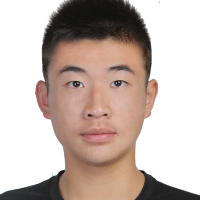
Hi, I’m Binghang Lu 👋
I am a graduate researcher in the School of Electrical and Computer Engineering at Purdue University, advised in close collaboration with the Department of Mathematics. My work sits at the intersection of large language models, continual learning, and AI for Science (AI4S) — building optimization and learning algorithms that let modern models keep learning new tasks, respect physical laws, and stay reliable under distribution shift.
I work on questions like: how do we update an LLM with new knowledge without erasing what it already knows? How do we train neural surrogates that obey conservation laws and PDEs at scale? What optimizers make both of these problems tractable?
🔬 Research Thrusts
Large Language Models
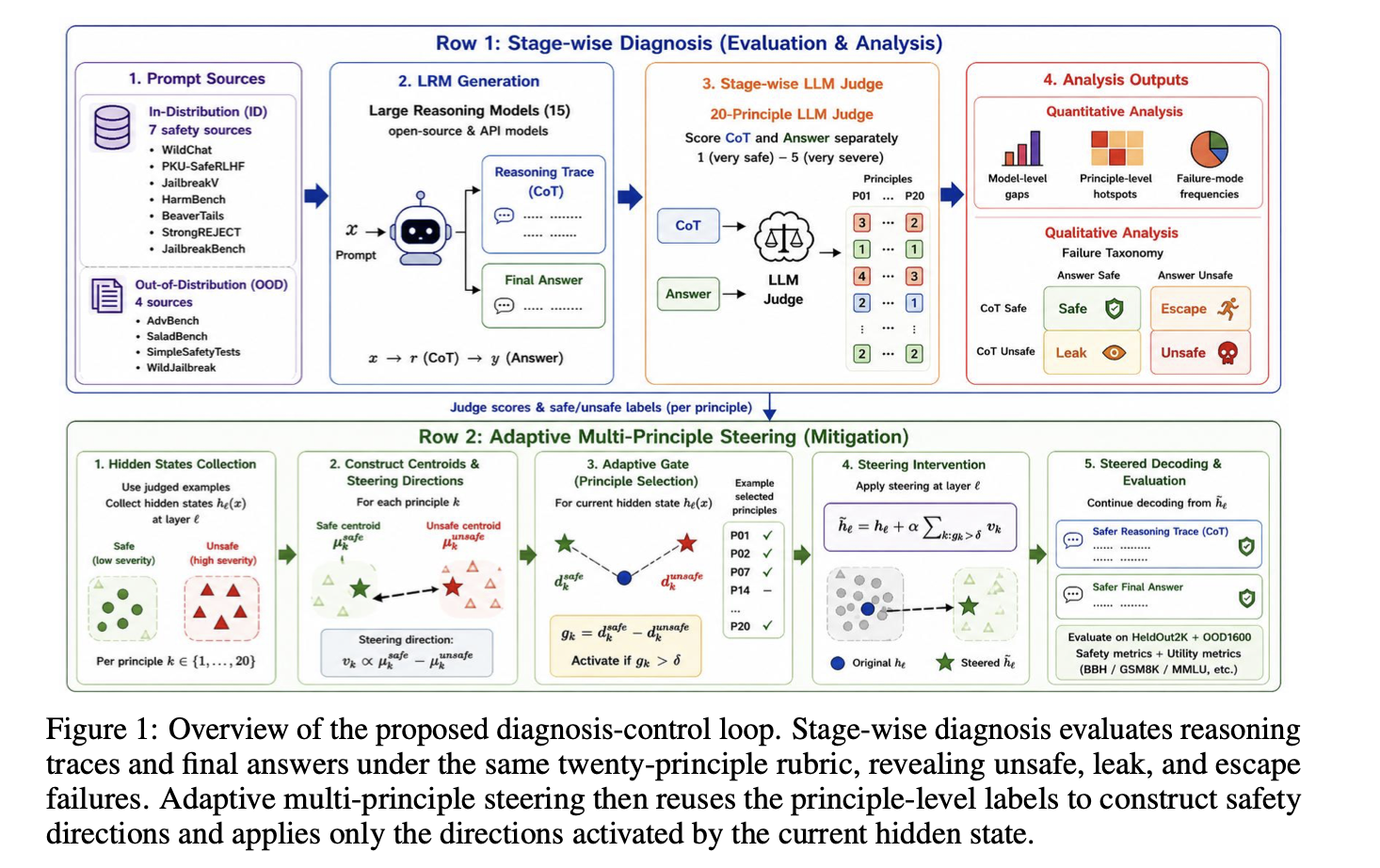
I design optimizer- and geometry-aware methods for adapting large pretrained models. Recent work introduces Muon-OGD, a spectral orthogonal-gradient-projection variant of the Muon optimizer for continual learning of LLMs, and contributes to safety research on large reasoning models (Chain of Risk, adaptive multi-principle steering).
Continual Learning (for LLMs)
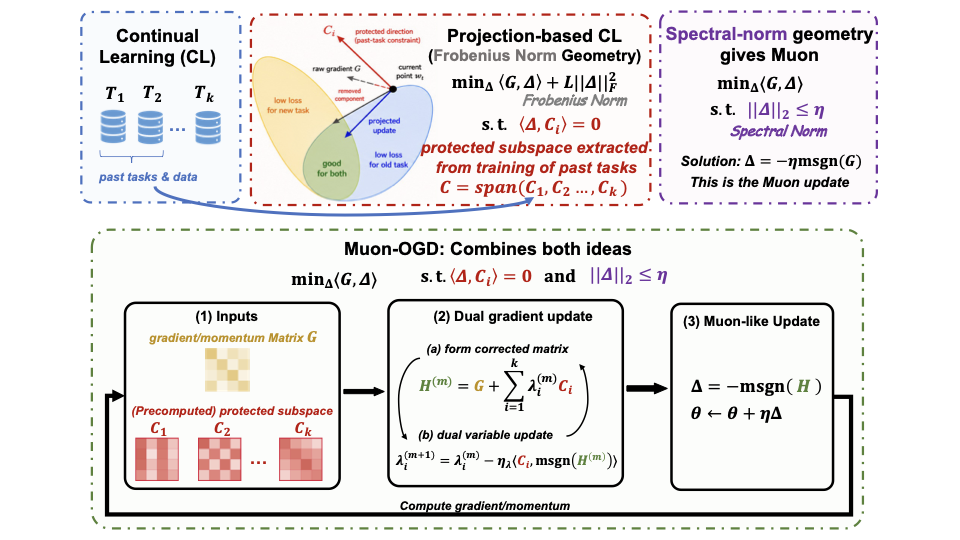
I am interested in forgetting-free adaptation of large language models — methods that let a pretrained LLM absorb a stream of new tasks or domains while preserving prior capabilities. My approach combines spectral / orthogonal gradient projection with the matrix-aware preconditioning of modern LLM optimizers (e.g., Muon), aimed at sharper plasticity–stability trade-offs in the post-training regime.
AI for Science (AI4S)
On the scientific machine learning side, I develop physics-informed and operator-learning frameworks for PDEs, including fractional and high-dimensional regimes. Representative work: fPINN-DeepONet (JCP 2025) for multi-term time-fractional diffusion–wave equations; iPINNER (JCP 2025) iterative inference via ensemble Kalman filtering; AdamFLIP for hard-constrained PINN training; Muon with Spectral Guidance for stiff scientific-ML objectives; Morphy-Net / NSGA-PINN multi-objective and evolutionary training; and Neural-POD for nonlinear functional model reduction.
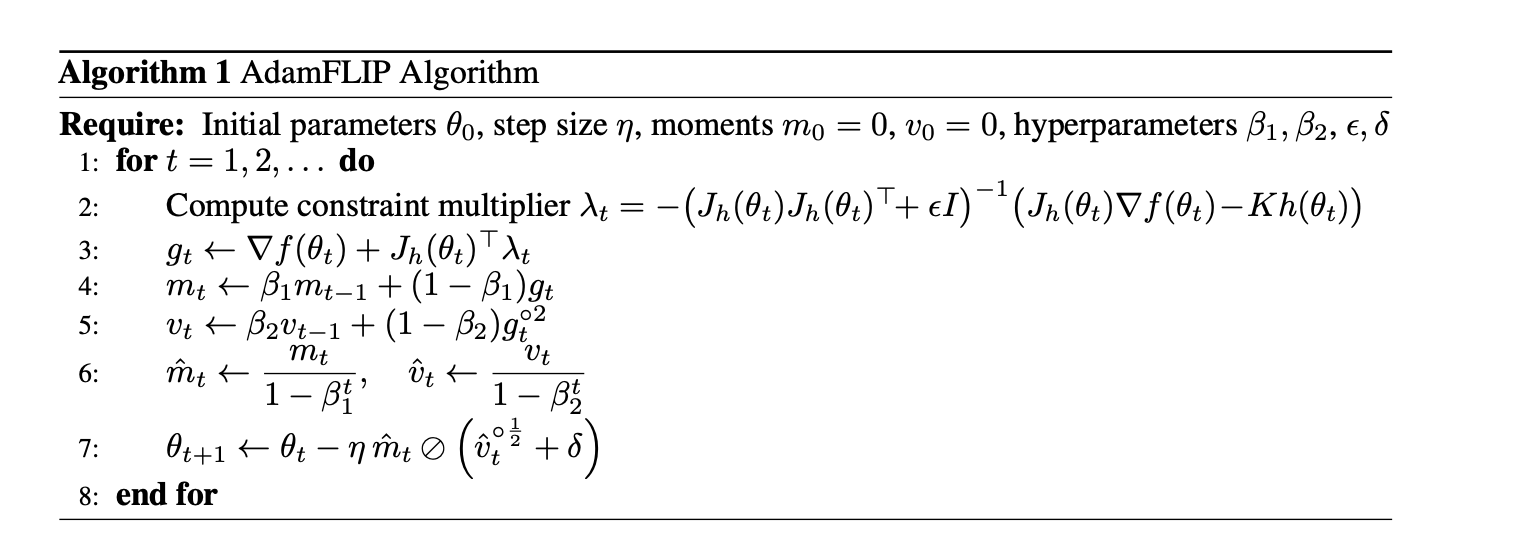
h(θ) = 0 step-by-step rather than via a soft penalty.📰 News
- [May/2026] New preprint: Muon-OGD — Muon-based Spectral Orthogonal Gradient Projection for LLM Continual Learning on arXiv.
- [May/2026] Morphy-Net accepted by Computer Methods in Applied Mechanics and Engineering (CMAME).
- [May/2026] New preprint: AdamFLIP — Adaptive Momentum Feedback Linearization for Hard-Constrained PINN Training on arXiv.
- [Apr/2026] New preprint: Chain of Risk — Safety Failures in Large Reasoning Models on arXiv.
- [Feb/2026] Two preprints released: Muon with Spectral Guidance and Neural-POD.
- [Sep/2025] Awarded IMSI (Institute for Mathematical and Statistical Innovation) travel award.
- [Aug/2025] Paper submitted to IEEE Transactions on Evolutionary Computation.
- [Aug/2025] iPINNER accepted by the Journal of Computational Physics.
- [Jun/2025] fPINN-DeepONet published in the Journal of Computational Physics.
- [Dec/2024] Awarded the Undergraduate Research Scholarship 2024–2025 (Top 5%), Purdue.
- [Apr/2024] Awarded the Spira Undergraduate Research Fellowship, College of Science, Purdue (1 / 6000).
- [Mar/2024] Office of Undergraduate Research Scholarship, Purdue (Top 5%).
- [May/2023] Thomas Arai Scholarship, Department of Mathematics, Purdue (Top 1%).
- [Mar/2023] NSGA-PINN published in Algorithms.
🧑🏫 Professional Service
Reviewer for:
- IEEE Transactions on Neural Networks and Learning Systems (TNNLS)
- IEEE Data Science and Advanced Analytics (DSAA)
- SIAM Multiscale Modeling and Simulation (MMS)
- Journal of Computing and Information Science in Engineering
📬 Contact
- 📧
lu895 [at] purdue [dot] edu - 📍 610 Purdue Mall, West Lafayette, IN 47907, USA
- 🔗 Google Scholar · GitHub · ORCID · CV (PDF)
I am always happy to talk about LLM post-training, continual learning theory, and physics-informed machine learning. If any of this resonates, feel free to reach out.